Sun protection in the UAE is something I didn’t take seriously enough when I first moved here from Europe, and I learned it the hard way.
Here, the sun is a completely different story. BBC Weather has rated UV levels in the UAE as extreme, the highest level on its scale, and a Dubai dermatologist told The National that the sun here is strong even in winter.
In this article
As the sun shines brightly in the UAE and summer is in full swing, we need to talk about sun protection. Let’s prepare for the summer while keeping our skin safe and healthy.
Why The Sun Here Is Different
The UV index is the number that tells you how strong the UV is where you are; it was developed by the WHO together with the UN Environment Program and the World Meteorological Organization. From 3 up, you need protection, and 11 and above is extreme, and our summers here sit right at the top of that scale.
The desert climate also changes your skin. Some of us get drier and more sensitive after moving here, some of us get an oilier T-zone, a lot of us get both at the same time, and all of it makes the skin more reactive to the sun.
I wasn’t used to applying so much SPF on my face; truth be told, back in Europe, I was applying my SPF cream in the morning and proceeding with my day without even thinking of reapplying it.
I remember one evening in December two years ago, in Romania, I used Retinol 1% in Squalane from The Ordinary, and the following day, I completely forgot to apply SPF before stepping out. By the end of the day, I noticed a big red spot on my face, itching, burning, extremely sensitive, and irritated. I was frustrated by this surprising reaction.
To heal it, I used the Evercalm™ Overnight Recovery Balm by REN Clean Skincare and the Egyptian Magic All-Purpose Skin Cream for a couple of days, locally only. It was pretty annoying; I couldn’t touch that irritated area of the skin, and I couldn’t apply makeup. I temporarily stopped the use of Retinol for a couple of weeks to give my skin time to recover.
I was served with a powerful reminder of the significance of SPF and the potential consequences of overlooking it, even in the winter.
I’m not a dermatologist, and I can’t tell you it was the Retinol alone; dermatologists don’t all agree on how much retinol by itself makes skin sun-sensitive. What I know is that the advice from the American Academy of Dermatology is to use retinoids at night and always protect your skin during the day, and after that week, I never skipped SPF the morning after retinol again.
SPF 30 Or SPF 50, And Why The Amount Matters More
The weather in the UAE offers lots of sunshine and high temperatures, making sun protection even more crucial to incorporate into our daily routines.
The risk of sun damage increases significantly with long hours of sunlight and intense UV radiation. Too much exposure to the sun‘s harmful rays is causing premature aging, sunburn, hyperpigmentation, and an increased risk of skin cancer.
We are in the intense climate of the Middle East, with its arid desert landscapes, causing some of us to have significant skin changes, and these changes are visible and are hurting us. Therefore, incorporating the correct and effective sun protection measures into our daily routine is paramount.
SPF measures protection against UVB, the rays that burn you, and “broad spectrum” on the label means it also covers UVA, the ones that go deeper and give you the fine lines and the dark spots. So broad spectrum is the first thing I look for on any bottle.
A lot of people think SPF 50 is almost double SPF 30, and it’s not; SPF 30 blocks about 97% of UVB and SPF 50 about 98%. I still reach for SPF 50 in summer, but the bigger difference is how much you put on. Most people only use 25 to 50% of the amount they need, and for the face alone you need at least a teaspoon, which looks like way too much the first time you squeeze it out.
Mineral Or Chemical: What To Pick For Your Skin
Chemical sunscreens absorb UV and turn it into heat; mineral ones with zinc oxide or titanium dioxide sit on top of the skin and reflect it away, and hybrids now mix both. Chemical ones usually feel lighter and sit better under makeup; mineral ones are usually gentler if your skin gets irritated easily, but they can leave a white cast, and a tinted one fixes that.
My skin is oily, and in this heat my T-zone gets even oilier, so I go for gel or oil-free textures with a matte finish that don’t add shine.
If your skin got dry after moving here, look for hyaluronic acid or glycerin in the formula; if it’s combination, go for something lightweight and non-comedogenic with a satin finish, and if it’s sensitive, try a fragrance-free mineral one first. Buy the small sizes to test; it saves you a lot of money on bottles you end up giving away.
When It’s More Than A Normal Sunburn
Most sunburns calm down by themselves in a few days, but a really bad one is what people call sun poisoning, which isn’t actually poisoning; it’s just a much worse burn. Harvard Health explains it can go from a red rash to blisters, swelling, and fever, and once the blisters open, you can lose fluids and get dehydrated or end up with an infection.
Living this close to the equator already puts us at higher risk, and the sand and the water bounce the UV right back at you, so a beach day in Dubai between 10am and 4pm without reapplying is exactly how it happens.
Some medications make you burn faster too, like certain antibiotics and blood pressure pills, so if you started something new, it’s worth asking your pharmacist. And if you have blisters together with fever, chills, headache, or you feel sick, go and see a doctor, and don’t pop the blisters.
My Sun Protection Survival Kit
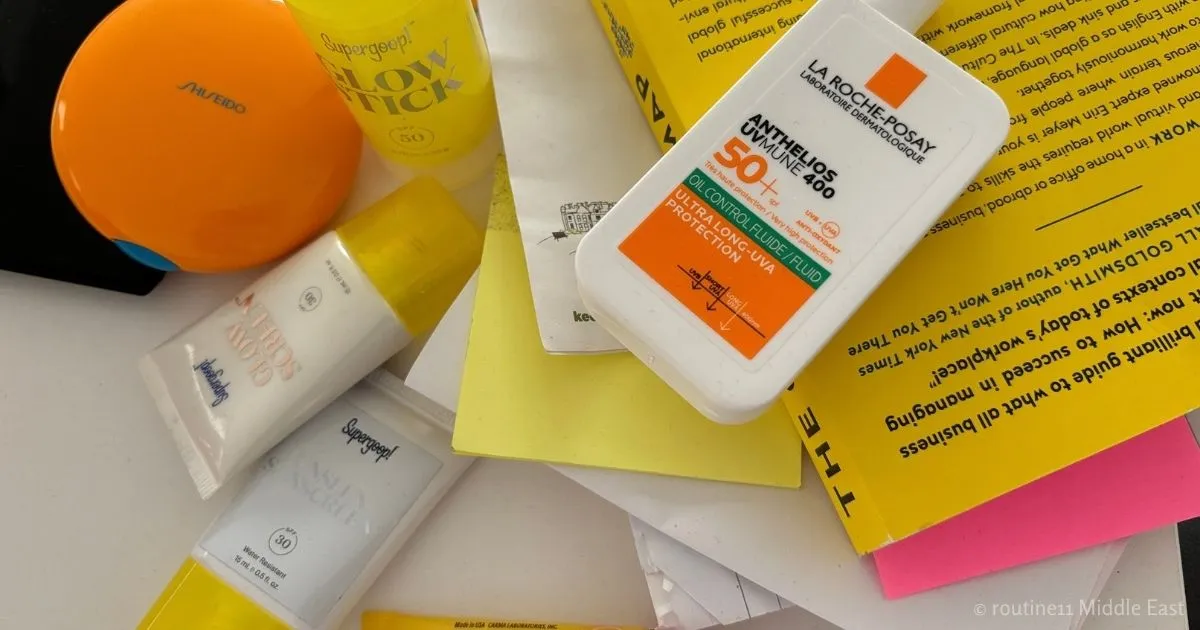
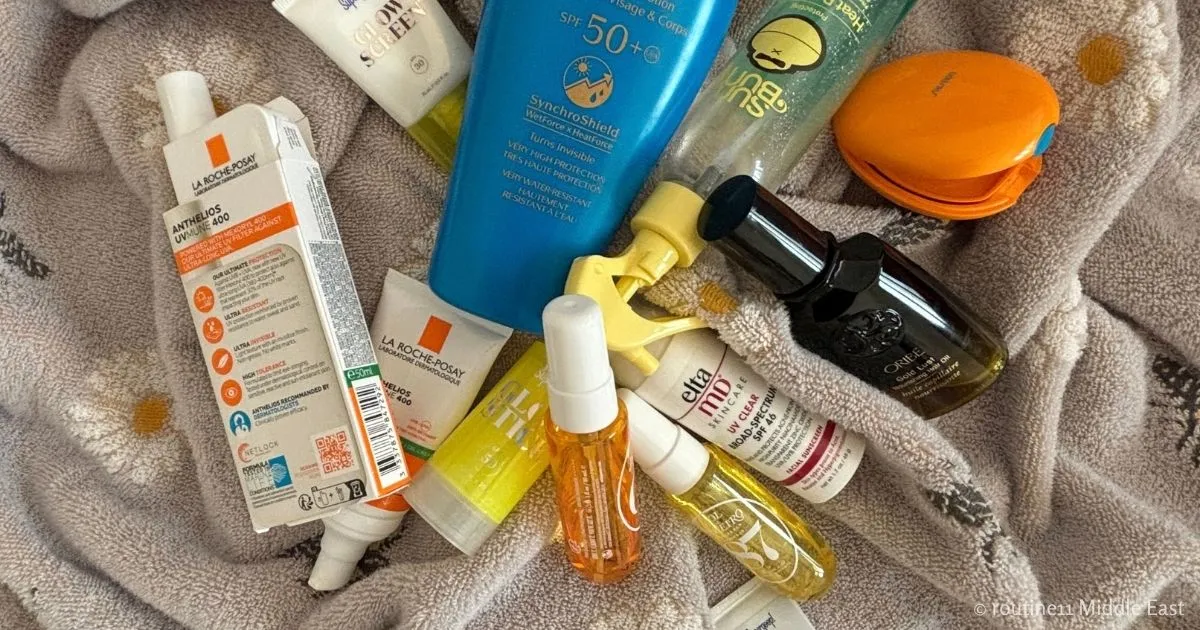
After relocating to the UAE, my skincare routine was built around SPF. Nowadays, it’s fair to say I swim in a sea full of SPF creams, gels, and lotions in all sizes. I have various travel-size SPF creams in my purses, in my car, on my desk, and even on my nightstand.
My rule is to reapply every two hours when I’m outside, and right away after swimming or sweating. Even water-resistant sunscreens are only tested for 40 or 80 minutes in water, so they don’t last the whole pool day either.
The Sunscreen Myths I Keep Hearing In Dubai
- “I only need it at the beach or on holiday.” You need it every day here; the drive to work counts, the school run counts, the coffee on the terrace counts.
- “It’s cloudy or dusty today, so I’m fine.” UVA goes through clouds and haze, and it’s the one behind the lines and the dark spots you notice months later.
- “Sunscreen will clog my pores.” Look for non-comedogenic or oil-free on the label; there are so many options now that this is not a reason anymore.
- “Higher SPF means I can stay out longer.” It doesn’t. SPF is about how much UVB it blocks, not how long it lasts. You still reapply every two hours, no matter what the bottle says.
Sun Protection In The UAE: FAQ
Do I really need sunscreen every day in the UAE, even in winter?
Yes, and this is the one I got wrong when I moved here. The sun here is strong even in the cooler months, and UVA gets through clouds and the dusty haze we get, so a grey-looking day doesn’t mean you’re safe. I just put it on every morning now like brushing my teeth.
Is SPF 50 better than SPF 30 for Dubai weather?
A little, but less than people think. SPF 30 blocks around 97% of UVB and SPF 50 around 98%. What actually changes things is the amount; most people use only a quarter to half of what they need, and for the face you need at least a teaspoon, so I’d rather someone use a generous SPF 30 than a thin layer of SPF 50.
How often should I reapply sunscreen in the UAE summer?
Every two hours, and straight away after swimming or sweating a lot, which in July in Dubai is basically every time you walk to the car. That’s why I keep travel sizes everywhere, in my bag, in the car, on my desk.
Do I need sunscreen if I’m indoors or driving most of the day?
UVA passes through glass, and car side windows usually let more through than the windscreen, so on long drives, yes. At home or in the office, it depends where you sit; away from windows, you don’t really need to reapply until you go out. Next to a big window, it’s worth doing it again during the day.
Can I use retinol in the UAE heat?
You can, I still do, but only at night and with SPF every single morning after. The one morning I skipped it after using Retinol 1%, I ended up with a red, burning patch I couldn’t put makeup on for days.
Which sunscreen is better for sensitive skin in the UAE, mineral or chemical?
Mineral ones with zinc oxide or titanium dioxide are usually gentler on reactive skin, and they’re what I’d try first if your skin gets irritated easily. The downside is the white cast; a tinted one avoids that and helps with dark spots too, which is useful for anyone here dealing with pigmentation.
The Founder
If you are an expat in the Middle East facing skin concerns and want to share your story, send us a message at contact@routine11.com
*Disclosure: I received no compensation for this review. This is solely based on my personal experience and assessment.