Skincare branding, if I go by the definition I’ve leaned on for most of my career, has nothing to do with the logo, the jar, or the nice font on the packaging. Marty Neumeier said it better than anyone in The Brand Gap: “A brand is a person’s gut feeling about a product, service, or company.” That gut feeling is what’s working on you when you’re standing in Boots or scrolling Noon at midnight, and you reach for the same moisturizer you bought last time, and most of it was decided long before you got anywhere near the shelf.
Table of Contents
I’ve been in marketing and communications for more than 15 years, the last 4 of them here in the UAE, and something I keep coming back to is how little we talk about the local skincare brands.
Everyone knows Huda Beauty. When I ran a few searches through Semrush for the UAE in September, “huda beauty” was getting around 33100 searches a month, her skincare line Wishful was getting about 140, and “made in UAE skincare” didn’t register at all.
But search isn’t everything. A lot of product discovery here happens on Instagram and in the family WhatsApp group, but the gap is big enough that I wanted to know where our local brands’ message is actually going.
I’ll be honest about my bias here. I’m always going to lean local. It’s the whole reason I started this blog, because I kept finding small independent cult beauty brands in the UAE making things I loved, some of them with ingredients from right here, like the camel milk The Camel Soap Factory buys from Al Ain Farms, and hardly anyone was writing about them.

A lot of the cult beauty brands I trust most started exactly like that: one person, a kitchen, a handful of carefully chosen ingredients and a lot of stubbornness.
There’s a practical side too. A cream made in Sharjah or Dubai hasn’t spent weeks in a shipping container and then a warehouse in 45-degree heat before it reaches you, and heat is not kind to vitamin C or natural oils, so what you get is fresher and made for this climate in the first place.
It isn’t always the cheapest option. Small batches rarely are, but more of the price is the actual product and the people who made it, since there’s no importer and no distributor taking a cut along the way.
So I picked 4 UAE-founded brands, very different from each other, and read them. I like all 4, and I’ve bought from some of them, so this isn’t me picking holes; I’m looking at what each one says, why it works on people, and where I think there’s still more to say.
Why you keep choosing the same moisturizer
Part of it is plain familiarity.
Psychologists call it “the mere exposure effect”: we like things more the more often we see them, and Byron Sharp built a good part of “How Brands Grow” around the idea that we buy the brands that come to mind easily and are easy to find. Big brands pay for that with shelf space and ad budgets.
The other part is that skincare feels risky. A bad cleanser can mean a week of breakouts, so once something works, we stop looking and stay with it for years.
Al Ries and Jack Trout saw all of this coming back in ’81. In Positioning, they wrote, “The easy way to get into a person’s mind is to be first.” For a small UAE brand arriving after Nivea and CeraVe are already sitting in your bathroom, being first in the whole category isn’t on the table anymore, so the real question is what it can be first at, and that turns out to be mostly a question of words.
The brand name, the product names, the lines on the back of the packaging, and the founder’s story on the About page are doing the job an ad budget does for the big players.
Where the market stands in 2026
The money is real, although every report gives you a different number depending on who’s counting and what they count. The global beauty market sits somewhere between 450 and 600 billion USD (Edison Group).
McKinsey expects it to keep growing at around 5% a year, with skincare making up about 40% of the value, and although the Middle East is still only about 3% of global beauty sales, around 70% of the executives they surveyed expect very high growth here and in India (McKinsey).
IMARC puts the GCC cosmetics market at about 9 billion USD in 2025, heading towards 15 billion USD by 2034, and names the harsh climate as one reason skin and sun care do so well here (IMARC).
Then another 2026 estimate puts Saudi Arabia alone at around 8 billion USD on a wider definition (FashionABC), which tells you how much the definitions matter.
In the UAE, skincare is the biggest category and beauty specialists are still where most people buy (P&S Intelligence).
What those numbers don’t show you is how crowded it’s getting. Ulta Beauty arrived at Mall of the Emirates and Dubai Mall, and its launch announcement named regional founders alongside the global brands (Business Wire).
The UAE also has some of the highest advertising costs per thousand impressions in the world, according to Evolut’s Beautyworld Middle East report, so outspending anyone isn’t a realistic plan for a small brand. One distributor in that report put it very simply, “This region rewards quality and commitment, not experimentation.”
Founders across the region know how hard it is. Amina Mango, who runs a Jordanian skincare brand, told Fast Company Middle East, “Building a beauty skincare brand is extremely complex and challenging,” and the same piece points out that plenty of shoppers here still prefer the global names they grew up with.
And yet the people running the region’s biggest retail groups have been saying for years that local brands have something the global ones don’t. Back in 2018, the late Anthony Chalhoub, then co-CEO of Chalhoub Group, said that new local beauty players “have understood the essence of needs of Gulf customers”, and McKinsey said much the same in its 2025 report, that global brands coming here will face competition from local players.
So there’s space for local brands here, the growth is there, and the people running the biggest retailers are saying it too. What I’m not sure about is whether local brands are actually telling us why they’re the better choice for living here, the heat and the AC, the ingredients from around here, talking to us in Arabic and English, because of the four I looked at for this piece, most of them aren’t saying it yet.
Gen Z and millennials, who’s buying and how
If you want to know who’ll decide which of these brands last, look at Gen Z first.
They’ll be about 22% of the GCC population by 2030 (Aletihad), and a Chalhoub Group and Meta study of more than 3,600 people in the UAE and Saudi Arabia found their personal care spending is expected to rise 1.5 times, with 60% saying skincare is the main reason they buy beauty at all (Chalhoub Group).
Anna Germanos from Meta said skincare brands need “tailored, relatable, digestible, and entertaining content” to win them over. The same research found 83% of Gen Z put transparent, credible brands first. They’re young, but they read the ingredient list, and they check the information they receive.
Millennials buy differently. NielsenIQ expects millennials to lead global beauty growth over the next decade and to overtake Gen X as the biggest spenders by 2034 (Business Wire). They’re online too, but one US survey found millennials were twice as likely as Gen Z to say they’d never bought a beauty product because of an influencer (GCI Magazine), which fits what I see in the UAE: millennials want proof, and they want a brand that doesn’t waste their time.
I wouldn’t forget Gen X either, who NielsenIQ says account for about a quarter of beauty spending and are some of the most loyal buyers once something works (CNBC). Euromonitor adds one more thread worth pulling, the share of luxury beauty shoppers influenced by medical professionals went from 40% to 45% in a year (Euromonitor).
What this means for a local brand is that one tone of voice rarely lands with all of them at once, so each brand has to decide who it’s really talking to.
Every moisturizer is the same 3 things
Take away the packaging, and nearly every moisturizer on the shelf is a mix of 3 types of ingredient:
- Humectants like glycerin and hyaluronic acid; to pull water into the skin.
- Emollients like squalane and plant oils; to smooth over the rough bits.
- Occlusives like shea butter, petrolatum, or dimethicone sit on top and slow down how fast that water leaves.
Ratios and price change a lot from brand to brand, but it’s the words on the box that do most of the separating.
Here in the UAE, there’s one more thing everybody shares, which is the climate. You go from humid heat outside to 8 or 9 hours of air conditioning inside, with strong sun most of the year and dusty winds on top of that.
Every brand that starts here is solving the same problem, and from a branding point of view that’s a gift: a brand from Seoul or Paris can talk about heat and AC all it likes; the brands here are the ones living in it.
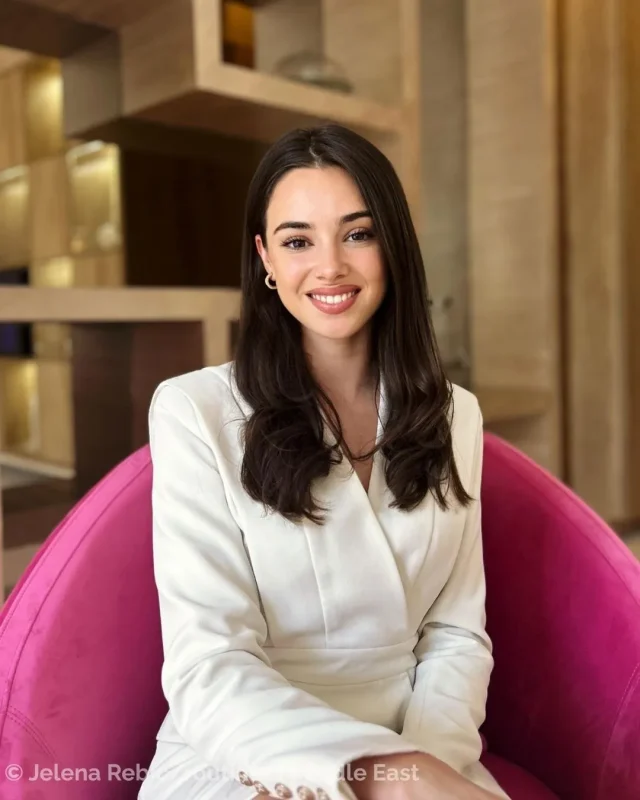
Wishful: the friend telling you her skin story
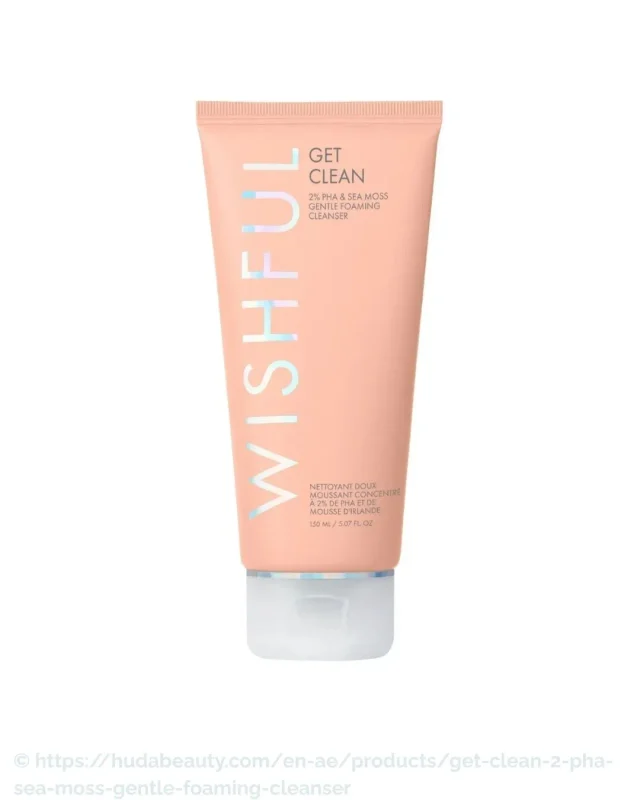
Huda Kattan launched Wishful in 2020 with one product, the Yo Glow Enzyme Scrub, and the launch letter read like a message to a friend, all about the journey she’d been on with her own skin.
The first products were made in South Korea, but the brand was founded here, in Dubai, and founded here is the kind of local I mean in this article. The product names still carry that tone, Thirst Trap serum, Honey Whip moisturizer, Clean Genie cleansing butter (Adore Beauty), the sort of names you’d send in a voice note, and exactly the relatable content Meta’s research says Gen Z wants.
Why it works is quite simple. We trust people more when they admit they’re not perfect. It’s called the pratfall effect, and Huda talking openly about her skin made the brand feel like advice rather than an ad. She also kept Wishful separate from Huda Beauty on purpose, and was honest about why: “I would never buy skin care from a makeup brand” (Yahoo). I think that was the right call for credibility.
The separation has a cost, though. Wishful doesn’t get the pull of the Huda name, and “wishful” is also an everyday word, so even the searches it does get are a bit muddy.
The voice could come from anywhere in the world, and nothing in it tells you it started in Dubai. I’d look at using the “by Huda Kattan” endorsement more deliberately while Wishful grows its own name, and, for its customers here in the Gulf, at a regional layer no other celebrity skincare line could copy, without touching the global voice that sells everywhere else.
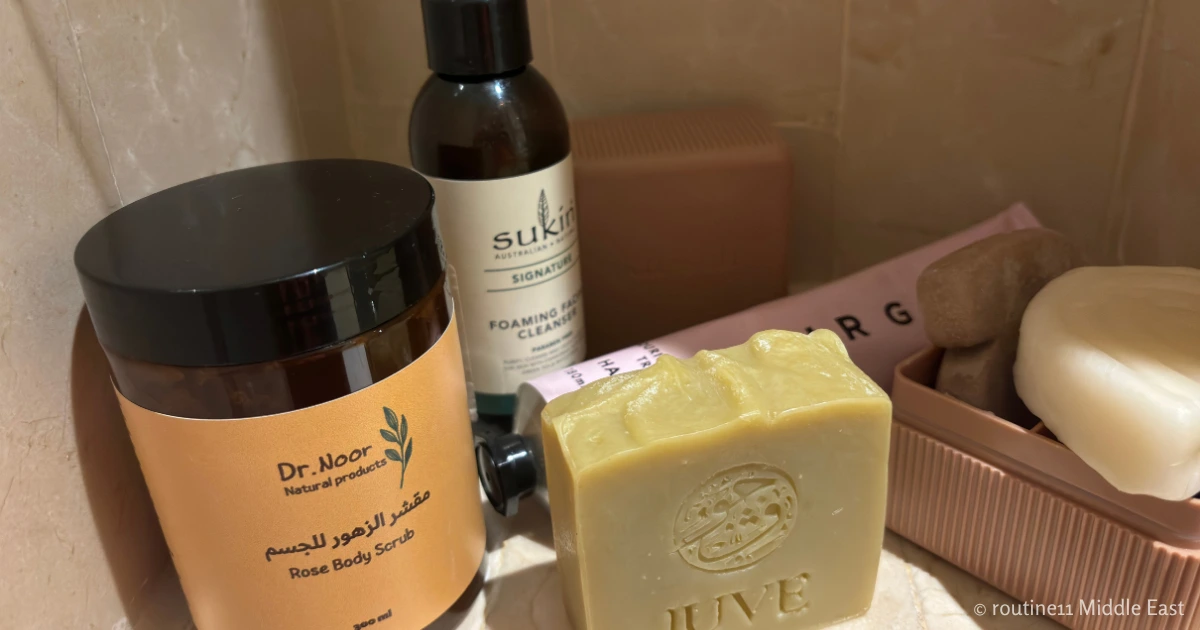
Dr. Noor: the doctor her followers asked for
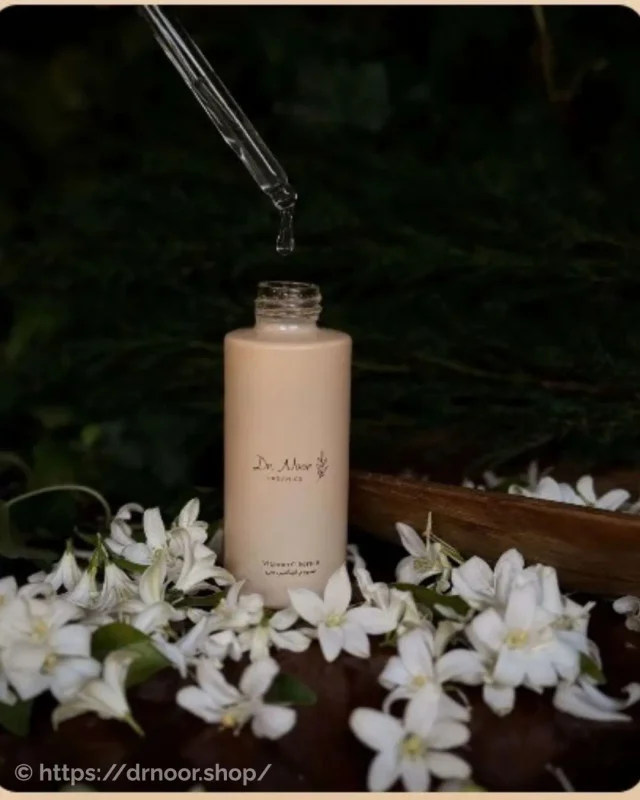
Dr. Noor is the one I find most interesting from a strategy point of view, because she did things in the right order.
The story on her site says she studied pharmacy, loved botany most, and started making short videos about herbs and nutrition, and after years of that, her followers kept asking her to make products, so she did.
The business is based between Sharjah and Dubai, and they have a physical retail storefront in Ajman.
Most brands make a product and then go looking for an audience. She had the audience before she had a single bottle.
In Donald Miller’s terms from Building a StoryBrand, her followers are the heroes, and she’s the guide, which is the right way round, and the Dr. in the name, backed by her pharmacy studies, gives people a reason to listen.
Customers are asking God to bless the doctor’s knowledge and work, and writing to her the way you’d write to someone you know.
You can feel it in the reviews. They read like thank-you notes. Customers are asking God to bless the doctor’s knowledge and work; one of them wrote that their hair fall stopped after a week on the rosemary oil. That’s a relationship with a person, and a bigger brand with a much bigger budget would find it very hard to buy that kind of trust.
The vocabulary is nature and care, secrets of nature, crafted with love, 100% natural, chemical-free.
A few things pull against that strength, though. Hair is clearly the star and skin is one menu item among several, so the skincare story is thinner than it could be. The story page stays in Arabic even when you switch the site to English, which means a big part of the people living in the UAE can’t read why this brand exists.
My direction would be to keep the teaching voice exactly as it is and put the founder story up in English too.
The Camel Soap Factory: the name that tells you everything
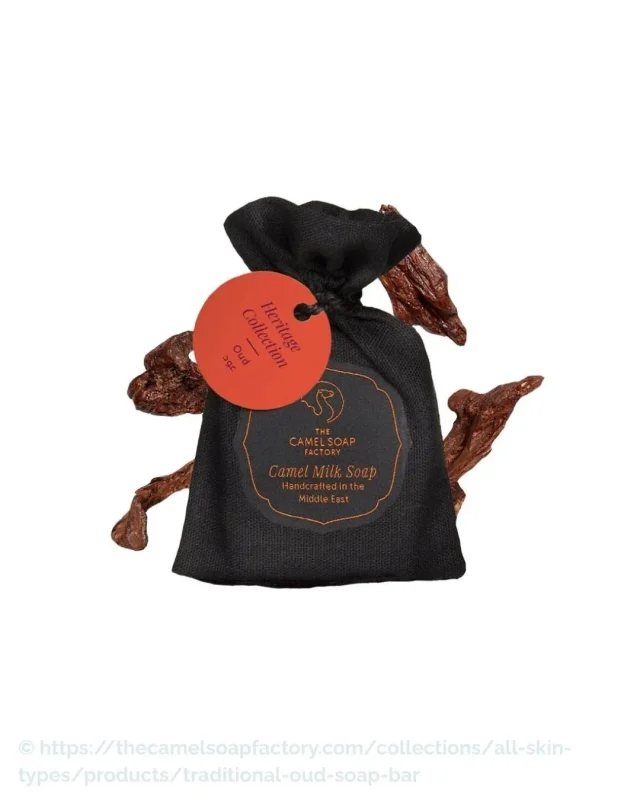
Stevi Lowmass started making soap in her kitchen, chose camel milk because it gave her something only this region has, and today The Camel Soap Factory describes itself as the world’s largest producer of camel milk skincare.
This is Ries and Trout in real life; it’s the biggest name in camel milk skincare, and it owns that rung of the ladder. The name is completely literal, and in my Semrush check, it was getting around 480 searches a month in the UAE, more than any other local skincare name I looked at outside Huda’s world, because there’s nothing to decode.
The language leans on gifting and heritage, gifts from the region and souvenirs that travel well. A souvenir sells because it’s attached to the best moment of somebody’s holiday.
The other side of that is when a brand talks mostly to visitors; its sales follow the visitors. Earlier this year, tourism dropped sharply, and the business felt it badly, and residents rallied round and bought thousands of bars of soap (The National).
So there’s a resident audience that already cares about this brand; it’s just not the audience the brand mostly speaks to. The brand says camel milk is rich in alpha hydroxy acids, and that’s an everyday skincare story as much as a gift story.
The direction I’d look at is a second reason to buy: same ingredient and same name, aimed at the people who live here all year.
Andsom Skin: permission for men who didn’t know where to start
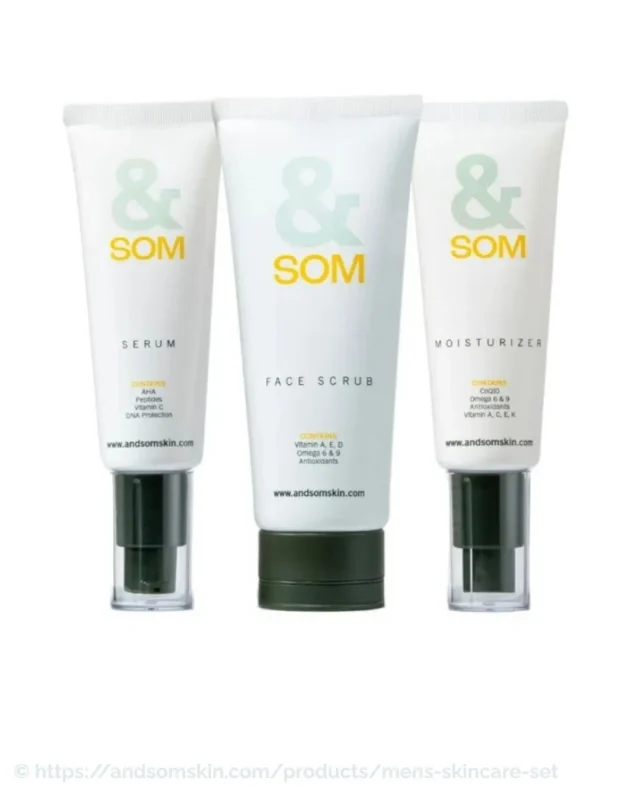
Andsom Skin is a “created in the United Arab Emirates” men’s skincare brand, and its whole voice is built around one feeling: not knowing where to start.
The founder story opens with exactly that, he knew he needed skincare and had no idea where to begin, so he started making it in his kitchen. The copy says the biggest reason men give up on skincare is complexity rather than skepticism, and the brand sells a three-step set with a 30-day money-back guarantee and a 94% customer satisfaction figure.
Of the 4, this is the most psychologically precise. 3 steps instead of a whole shelf lowers the effort of starting, the guarantee takes away the risk of trying, and the founder talks like one of the guys rather than an expert looking down at you. It’s also close to what the millennial research says: proof and no wasted time.
Here the customers are already writing better headlines than the brand.
One review says it works even in Dubai’s harsh climate, and I couldn’t find that idea anywhere on the brand pages I read. Neumeier’s whole point is that a brand is what the customers say it is, not what the company says, and here they’re saying something the brand isn’t.
The name also shows up in a few different ways. The website title and Instagram say Andsom Skin, the copy on the same homepage says &SOM, and TikTok and YouTube go with &SOM Skin. I’m guessing &SOM is meant to be the logo, and Andsom is how you say it, handsome without the “h”, which is a nice idea, but the brand never actually tells you that, so on the page you’re never quite sure which one is the name. Donald Miller has a line for this in Building a StoryBrand, “If you confuse, you’ll lose.”
I’d start by pulling customers’ own words into the brand and deciding which one is the logo and which one is the name, then using them the same way everywhere.
What 4 vocabularies reveal
Put them side by side, and each brand speaks really well to one kind of person.
Wishful talks to Huda’s followers and to Gen Z.
Dr. Noor to Arabic-speaking women who’ve watched her videos for years.
The Camel Soap Factory to visitors.
And Andsom to men who are new to all of this.
None of them is doing it wrong. I just think each one has an audience sitting right next to it that it hasn’t really talked to yet.
Not one of them owns the climate in its own words, even though it’s the one thing they all share and the thing IMARC names as a reason skincare sells here in the first place.
Twice I found customers describing a brand better than the brand describes itself. And the language split runs right through the market: the English-first brands barely use Arabic, and the one Arabic-first brand here is thin in English, in a country where most of us move between both every day.
3 of the 4 also lean on the founder’s personal story, which works really well, though it also means the brand tends to go quiet whenever the founder is busy with something else.
Where UAE-founded skincare branding goes next
I won’t write anyone’s strategy in a blog post, but if I had to point in a direction, I’d borrow the order Michael Johnson uses in “Branding in Five and a Half Steps”: investigation, then strategy and narrative, then design, implementation and engagement, with his half step between strategy and design where the words have to turn into something you can see.
He wrote the book to help brands “clarify, not confuse”, which is a good test for everything above.
Investigation for a skincare branding in the UAE means an honest audit: the website and the packaging and the captions and the reviews all laid out next to each other, so you can see what you’re saying and what your customers are saying back.
Strategy and narrative means deciding who you’re talking to first, Gen Z or millennials or visitors or men who’ve never owned a serum, and after that, what you actually want to tell them. A lot of brands here skip that bit and try to talk to everyone in Dubai at the same time.
Byron Sharp would push back on this; his research says brands grow by reaching as many buyers in the category as they can, and for a big brand I’d agree, but a small brand here with a small budget has to win one group properly before it can afford to go wide.
Where most of these 4 could win: design, turning one clear vocabulary into names, packaging, and an Instagram grid that all say the same thing.
Implementation is the unglamorous part, the same name spelled the same way on the website, the box, the courier sticker, and the WhatsApp reply.
Engagement is where the climate, the Arabic, and the customers’ own words stop being nice ideas and start showing up every week.
Whatever you say, make sure you can back it up, because your customer in Dubai reads ingredient lists, and a claim that sounds nice in a caption will turn into an awkward conversation later, with a customer or with the regulator.
The Founder
If you run a UAE skincare brand and want a second pair of eyes on your words, my LinkedIn is here.
If you are an expat in the Middle East facing skin concerns and want to share your story, send us a message at contact@routine11.com
*Disclosure: I received no compensation for this review. This is solely based on my personal experience and assessment.